
About
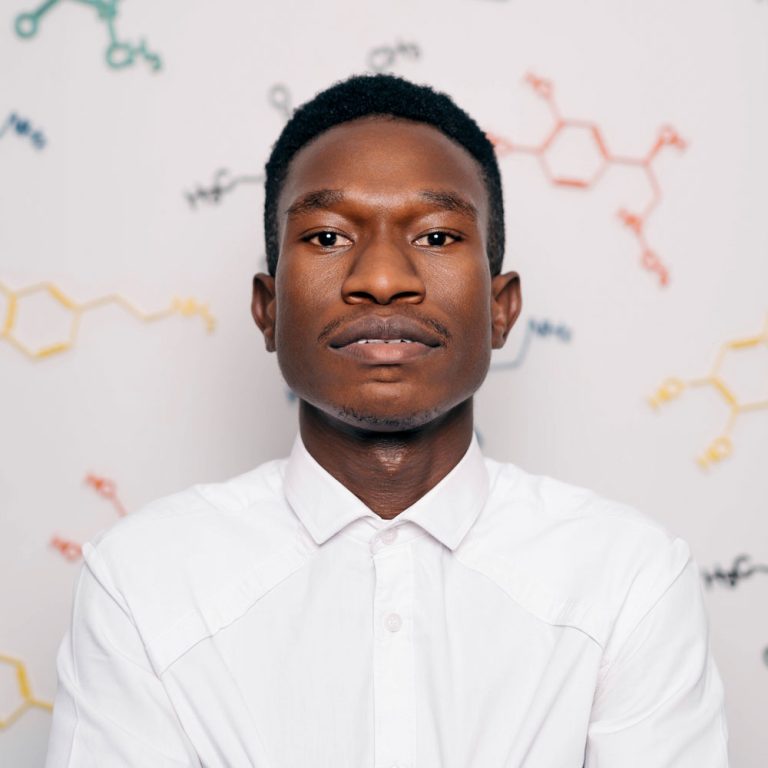
Kamogelo Mmotla, born and raised in the rural village of Tafelkop in Limpopo, has always had a passion for science and research. After completing his matric in 2016, he enrolled in the University of Limpopo, where he pursued a Bachelor of Science in Life Sciences. During his undergraduate studies, he specialised in Biochemistry, Industrial Biotechnology, and Immunology, laying the foundation for his future academic pursuits. Upon graduating, Kamogelo sought to deepen his expertise by enrolling in an Honours program in Biochemistry at the University of Johannesburg. Under the mentorship of Mr. Mashabela and Dr. Mhlongo, his Honours research focused on the role of Volatile Organic Compounds (VOCs) in communication between Plant Growth-Promoting Rhizobacteria (PGPR). His project explored how these rhizobacteria use VOCs to interact with one another and influence plant growth, a topic of significant importance for sustainable agriculture and soil health.
Driven by his passion for biochemistry, Kamogelo is now pursuing a Master’s degree at the University of Johannesburg. His research delves deeper into PGPR-PGPR interactions, using advanced techniques such as transcriptomics, metabolomics, and bioinformatics to unravel the complex molecular dialogues that occur between these beneficial microbes. Under the supervision of Dr. Mhlongo, Kamogelo is investigating how these interactions can be harnessed to improve understanding of the rhizosphere.
Beyond his academic achievements, Kamogelo is dedicated to making a positive impact on his community. Inspired by his rural upbringing, he hopes to apply his research to develop sustainable agricultural solutions that can benefit smallholder farmers in Limpopo and beyond. His long-term goal is to bridge the gap between scientific research and real-world agricultural practices, ensuring that his work contributes to food security, environmental conservation, and rural development in South Africa.
Research interests
-
Microbe-microbe interaction
-
Metabolomics
-
Transcriptomics
-
Bioinformatics
