
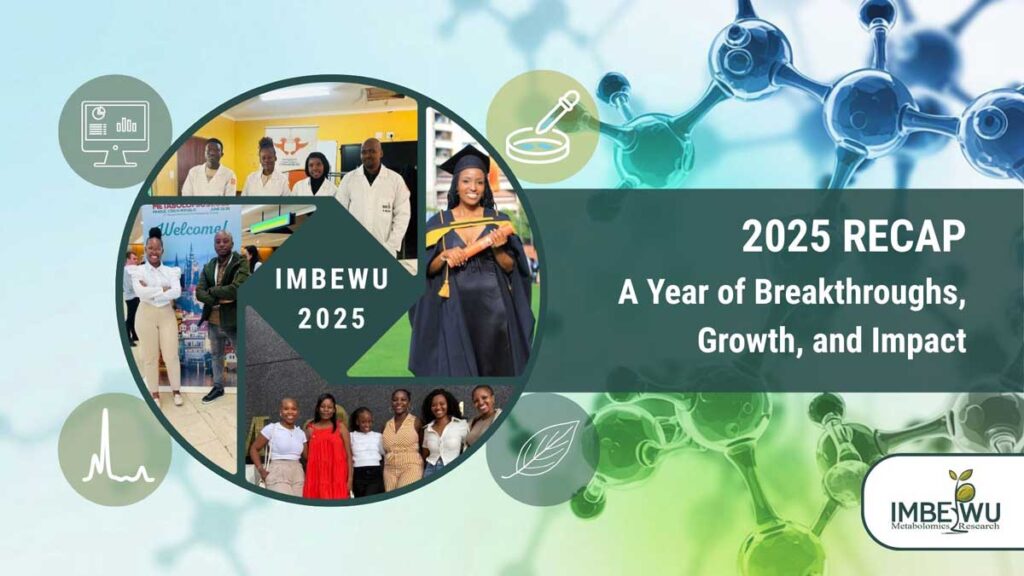
As we wrap up an extraordinary 2025, the Imbewu Metabolomics Research Group (IMRG) reflects on a transformative year. Nestled within the Research Centre for Plant Metabolomics (RCPM) at the University of Johannesburg (UJ), we’ve solidified our role as a national powerhouse in plant metabolomics, plant-microbe and microbe-microbe interactions, and natural products research, and 4IR-driven biochemical innovation. From securing major funding to mentoring the next generation of scientists and engaging communities, IMRG has delivered on every front. Let’s dive into the highlights.
Funding Acquisitions Fuelling Bold Research
This year, IMRG secured competitive funding from prominent sources, including the University Research Committee (URC), NRF Thuthuka, and the EU Horizon CropPrime Project. These grants not only boosted our progress in the lab, but also powered cutting-edge research, postgraduate training, and global collaborations. Imagine rhizosphere microbes “whispering” chemical signals to plants, or AI algorithms sifting through vast metabolomic datasets to uncover biostimulants and promising drug “leads.” That’s the work these funds enabled, pushing sustainable agriculture and phytochemistry-driven drug discovery forward in line with UJ’s Strategic Plan 2035, the UN Sustainable Development Goals (SDGs), and Africa’s Agenda 2063.
Publications That Shaped the Field
IMRG’s research output shone brightly in 2025, with nine peer-reviewed publications, two under review, and a total of 6.12 research output units. These publications broke new ground in rhizosphere chemical communication, metabolomics-guided biostimulant discovery, and AI-powered natural product drug development.
- Sibanyoni, N. R., Mmotla, K., Mashabela, M. D., Piater, L. A., Kerchev, P. and Mhlongo, M. I. (2025). Unravelling rhizosphere chemical communication: metabolomics insights into rhizophore plant-microbe interactions and mediated plant defence mechanisms. Plant and Soil. Doi: 10.1007/s11104-025-08010-4.
- Mashabela, M. D., Piater, L. A., Tarekegn, T., Kerchev, P., Sujeeth, N., and Mhlongo, M.I. (2025). Metabolomics-guided mode of action discovery and metabolic reprogramming of Laminaria extracts and PGPR on wheat seedlings: Insights into potential priming for plant growth and defence. Plant Growth and Regulation. Doi: 10.21203/rs.3.rs-7656371/v1. PRE-PRINT (Accepted)
- Mashabela, M. D., Tarekegn, T., Kerchev, P., and Mhlongo, M.I., (2025). Biostimulants and beyond: Molecular mechanisms for climate-smart and policy-driven agriculture. Frontiers in Plant Science 16, 1710899. Doi: 10.3389/fpls.2025.1710899.
- Mmotla, K., Sibanyoni, R. N., Allie, F., Mafuna, T., Mhlongo, M. I. and Mashabela, M. D. (2025). Cross-species metabolic reprogramming: A metabolomics-aided investigation of inter-species metabolic perturbations triggered by PGPR-derived metabolites. Frontiers in Microbiology 16, 1668025. Doi: 10.3389/fmicb.2025.1668025.
- Msobo, A., Tsotetsi, T. N., Koorsen, G., Piater, L. A. and Mhlongo, M. I. (2025). Deciphering the chemical and therapeutic potential of Salvia species Against COVID-19: A LC-MS-based metabolomics and network pharmacology study. SAJB. 74 – 87. Doi: 10.1016/j.sajb.2025.08.041.
- Mmotla, K., Allie F., Mafuna, T., Mhlongo, M. I. and Mashabela, M. D. (2025). Metabolomic profiling of VOC-driven interactions between Priestia megaterium and Bacillus licheniformis in a simulated rhizosphere using split petri dishes. Arch. Microbiol. 207: 224. Doi: 10.1007/s00203-025-04426-9
- Sibanyoni, N. R., Piater, L. A., Kerchev, P., Madala, N. E. and Mhlongo, M. I. (2025). Metabolomic insights into cross-feeding interactions between Priestia megaterium PM and Pseudomonas fluorescens NO4: Unveiling microbial communication in plant growth- promoting rhizobacteria. Microb. Ecol. 88: 76. Doi: 10.1007/s00248-025-02577-2.
- Msobo, A., Mashabela, M. D., Koorsen, G., Tsotetsi, T. N., Piater, L. A., Madala, N. E., Tshiwawa, T. and Mhlongo, M. I. (2025). Molecular docking and network pharmacology highlights salvianolic acids as potential inhibitors and therapeutic agents for COVID-19 treatment. Phytochemistry Letters. 68: 102991. Doi: 10.1016/j.phytol.2025.102991.
- Mmotla, K., Sibanyoni, N. R., Allie, F., Sitole, L., Mafuna, T., Mashabela, M. D., Mhlongo, M. I. (2025). Exploring the intricacies of plant growth promoting rhizobacteria interactions: an omics review. Annals of Microbiology. 75: 5. Doi: 10.1186/s13213-025-01793-y.
- Maphari, P. W., Simelane, M. B. C., Madala, N. E. and Mhlongo, M. I. (2025). Comparative metabolites profiling of different solvent extracts of Asparagus species cladodes using LC-MS-based metabolomics and molecular networking. Phytochemical Analysis. 36: 506-519. Doi: 10.1002/pca.3446.
- Msobo, A., Maphari, P. W., Koorsen, G., Signab, A. N., and Mhlongo, M. I. (2025). Modernising antiviral drug discovery: Harnessing medicinal plants through machine learning and metabolomics to target the SARS-CoV-2 main protease. In silico Pharmacology. Under Review.
Our research output covered themes such as the influence of microbial (PGPR) and non-microbial (Seaweed extracts) biostimulant on plant metabolite networks for plant growth, development and resilience, as well as on beneficial microbial communities in the rhizosphere. This work was accomplished with 4IR-based computational tools such as Waters Connect, MsDial, MzMine, Metaboanalyst, GNPS and Cytoscape for data acquisition, processing, analysis and interpretation. Our work not only advanced scientific knowledge but also positioned South African metabolomics on the global stage, through participations at the 21st Annual International Conference of the Metabolomics Society, that took place in Prague, Czech Republic.
Building the Next Generation of Scientists
Nothing excites us more than nurturing talent. In 2025, we graduated two MSc students, and one is in the final throes of examination. Mr Kamogelo Mmotla graduated with distinction in Biochemistry. His master’s thesis, titled “Metabolomics-based investigation of the chemical communication between two PGPR strains Priestia megaterium and Bacillus licheniformis,” provides valuable insights into the complex interactions of plant growth-promoting rhizobacteria (PGPR). This research is crucial for understanding how these microbes cooperate to enhance plant health and growth. Kamogelo’s research has resulted in three scientific publications, as highlighted in the previous blog post. Meanwhile, Ms Thando Tola received her master’s degree from a study titled “Transcriptomic and metabolomic data integration to decode the chemical space of three Ocimum plant species – A 4IR study.”
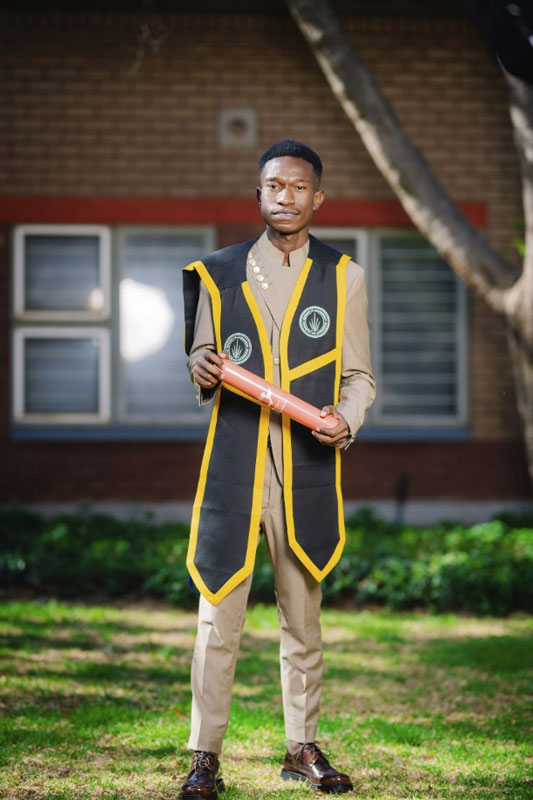

Ms. Nompumelelo Sibanyoni, IMRG’s trailblazing PhD candidate, successfully defended her thesis -“Metabolomic analysis of rhizosphere microbial chemical communication and its protective effects on tomato seedlings against Pseudomonas syringae Pst” on October 16, 2025, and received her letter of completion from the university on November 20th, 2025. Her groundbreaking work has already yielded publications in two prestigious journals, with more in preparation. As IMRG’s first PhD graduate, this milestone highlights our unwavering commitment to mentorship and cultivating Africa’s next generation of research leaders.
 Mr. Motlotleng Thipe, another PhD candidate, is actively bolstering national agricultural resilience through his role on the ARC Small Grains (ARC-SG) rust monitoring team. Supervised by Dr. M.I. Mhlongo (UJ) and co-supervised by Dr. T.G. Terefe (ARC-SG), his efforts highlight the strengthening of the UJ-ARC-SG partnership in science-based disease management. Wheat rust diseases from Puccinia triticina, P. graminis f. sp. tritici, and P. striiformis f. sp. tritici threaten up to 90% yield losses, making this work vital for UN SDG 2 (Zero Hunger), SDG 12 (Responsible Consumption and Production), and Africa’s Agenda 2063 vision of food security and climate resilience. Through training in mass spectrometry, data visualisation, and writing, we have equipped these scholars to tackle real-world challenges, such as climate-resilient farming and microbiome-driven health solutions.
Pioneering the Future of Academia: Nurturing Emerging Scholars Programme (NESP) Appointment

Driving innovation at the intersection of biochemistry and emerging technologies, the University of Johannesburg’s Department of Biochemistry has appointed Ms. Sindiswa Mahlangu as the 2025 recipient of the DHET NESP Master’s Scholarship. This prestigious recognition highlights her academic excellence, dedication to research, and strong commitment to a career in academia. Sindiswa focuses on advancing data analysis approaches in metabolomics, aiming to bridge the gap between academic research and clinical applications, thereby enabling more effective and innovative drug discovery. Through this scholarship, she will continue to grow as an emerging scholar while making meaningful contributions to data-driven biochemical research.
Global Visibility and Prestigious Recognition
IMRG stepped into the international spotlight at the 21st Metabolomics Society Conference in Prague (June 2025), where we presented groundbreaking research and networked with global experts. Our research, presented by Mr. Dannies Mashabela and Ms. Nompumelelo Sibanyoni, under the theme of Plant-microbe interactions. Back home, Dr. Mhlongo clinched the NRF Research Excellence Award for Early Career/Emerging Researchers (2025), a testament to her leadership and our group’s rising influence. These moments amplified our voice in 4IR biochemistry, fostering partnerships that will shape metabolomics for years to come.


Still in the same breath of fostering international collaboration, Mr. Dannies Mashabela travelled to Plovdiv in Bulgaria on the 15th of October 2025, joining the Center of Plant Systems Biology and Biotechnology (CPSBB), as a secondee under the CropPrime project, in collaboration with the University of Johannesburg and the European Union’s Marie Skłodowska-Curie Actions, to advance research in plant systems biology and sustainable crop improvement. He is looking forward to a productive and inspiring stay.

For his four-month secondment at CPSBB as part of the CropPrime project, Manamele will undertake training on RNA-seq and transcriptomics-based bioinformatics data analysis, working closely with Dr Rafe Lyall. Work in this project will include an RNA-seq study with Laminarin-treated tomatoes subjected to biotic stress by Pseudomonas syringae DC3000 pathovar tomato. This will include a comprehensive transcriptomics data analysis to investigate the functional gene expression patterns resulting from the pathogen and laminarin treatments, aiming to gain insight into the cellular regulatory processes involved.
Metabolomics Workshops Led by IMRG
IMRG led transformative hands-on training in 2025, building national and global capacity in metabolomics. These workshops showcased our expertise in proteomics, data analysis, and plant science applications.
OpenMS in Action Workshop (Feb 17-18, APK Library, UJ): In collaboration with ACGT and RCPM, IMRG hosted this event led by Dr. Samuel Wein and Mr. Tom Müller from OpenMS/University of Tübingen, Germany. Day 1 covered fundamentals, protein identification, and quality control; Day 2 delved into label-free quantification and metabolite profiling using OpenMS and KNIME. Participants hailed from UJ, UP, UKZN, Stellenbosch, UNISA, Wits, DUT, TUT, NICD, and ACGT, fostering cross-institutional synergy.


C-MS Plant Metabolomics Workshop (June 23-26, University of Venda): IMRG spearheaded this four-day workshop, which drew 48 delegates from 11 institutions, including UJ (7 participants, 6 facilitators), UP, UNISA, TUT, NWU, UL, the University of Zimbabwe, and AIBST. Dr. Msizi Mhlongo (organizing committee) led UJ’s team alongside Ms. Anathi Msobo and Ms. Pfano Maphari, delivering LC-MS data acquisition, preprocessing, annotation, and interpretation. The surge in applications affirmed UJ’s leadership in metabolomics.
Online Metabolomics Workshop (IMRG, RCPM, CropPrime EU, ACGT): This virtual event exploded with 973 applications. We featured 19 facilitators and panellists from UJ and partners, peaked at 385 concurrent participants, and reached 712 unique Zoom users across the full day. Strong African representation came from South Africa (UJ, NWU, UP, UNISA, DUT), Morocco (Hassan II, Cadi Ayyad, Mohammed V, UM6P), Nigeria (Obafemi Awolowo, ABU Zaria), and Cameroon (Yaoundé 1). Global reach extended to India (IARI, ICAR, CSIR, Assam Ag Uni, Banaras) and Pakistan (UAF, Quaid-i-Azam).
These workshops amplified IMRG’s impact, equipping researchers for sustainable agriculture and beyond.
Community Outreach: Science for All
IMRG believes science thrives when shared. During South African Science Week, IMRG proudly engaged with the next generation of scientists by hosting inspiring outreach events for Grade 12 science learners from Ingqayizivele Secondary School in Thembisa and Masisebenze Comprehensive School on 6 and 7 August 2025. Hands-on workshops demystified metabolomics, sparking curiosity in young minds.

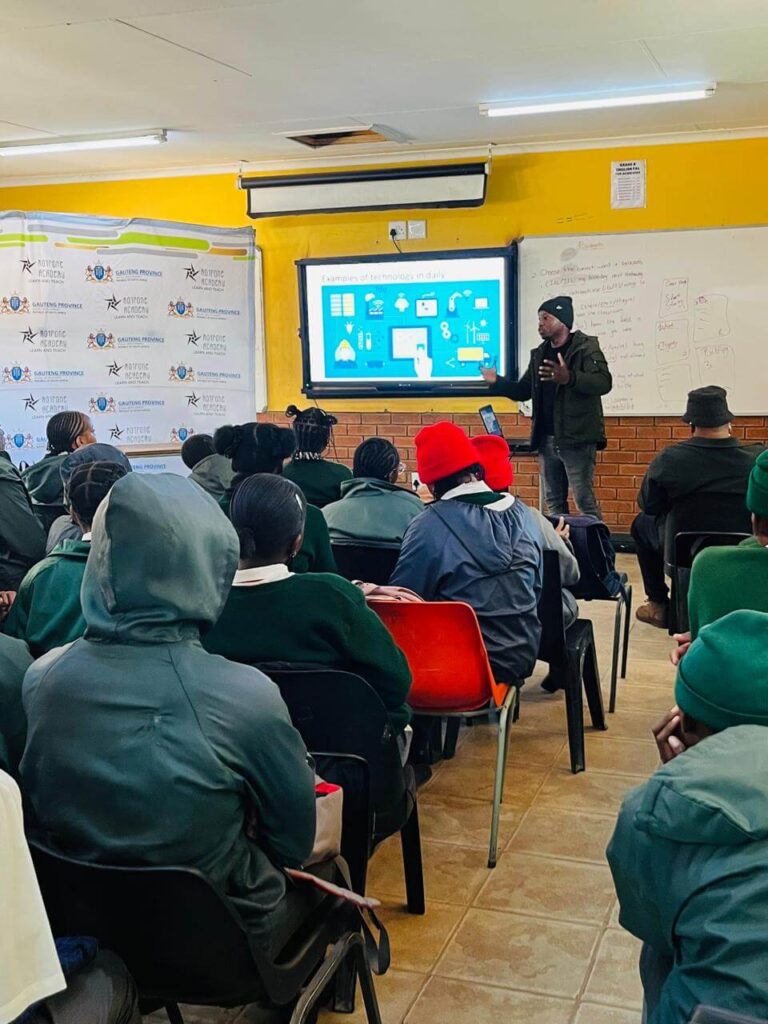
We also powered UJ STEAM Week, blending research with outreach to inspire sustainable innovation from the ground up.
Looking Ahead: Innovation for a Sustainable Future
2025 proved that IMRG’s formula, rigorous research, dedicated mentorship, and inclusive outreach drive real change. As we prepare for 2026, we are excited to deepen AI-metabolomics integrations, expand the impact of the CropPrime project, and welcome more collaborators.
We would like to thank our funders, students, and community partners. From all of us at IMRG, we wish you a Merry Christmas filled with joy and a Happy New Year bursting with new possibilities. Here’s to more breakthroughs ahead.
